

Upcoming events

Past events
First EV4 Conference in Budapest Marks a Promising Start for the EV4 Alliance
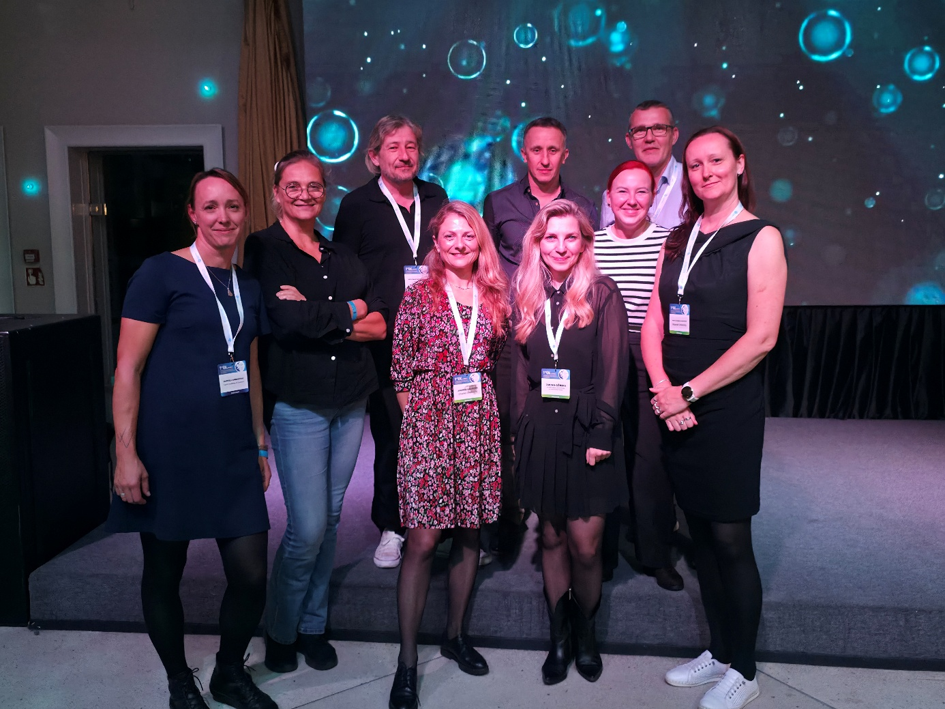
The first EV4 – Extracellular Vesicles in Visegrad Collaboration conference brought together more than 150 researchers, students and industry representatives from across Europe. Held on 21–22 October 2026 at Semmelweis University in Budapest, the meeting marked the launch of the EV4 Alliance, connecting EV research communities from the Czech Republic, Slovakia, Poland and Hungary to strengthen scientific exchange and cross-border collaboration. The Czech Society for Extracellular Vesicles (CzeSEV) was proud to co-organise the meeting, represented on the organising committee by Vendula Hlaváčková Pospíchalová, Andrea Gálisová and Jan Balvan.

Three Days of Science and Networking
The event kicked off on 20 October with hands-on workshops, organised in collaboration with industry partners Bio-Science Kft., Beckman Coulter Life Sciences and Exodus Bio, offering practical experience with EV isolation and analysis technologies.
The day also featured an enjoyable Early-Career Researchers (ECR) Social Event, combining networking with an unconventional and entertaining tour of Budapest, a great opportunity for young scientists to get to know each other before the conference officially began.
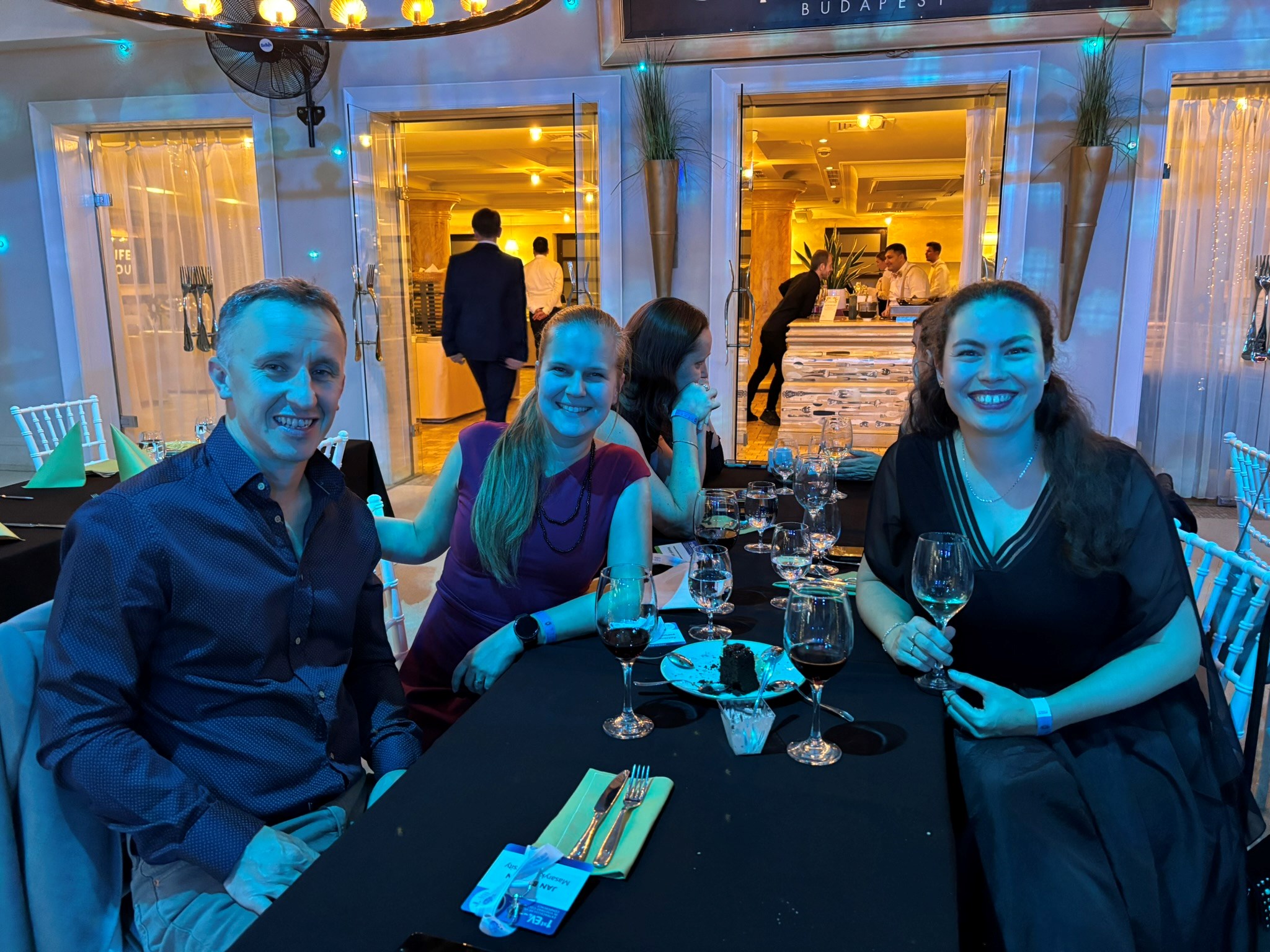
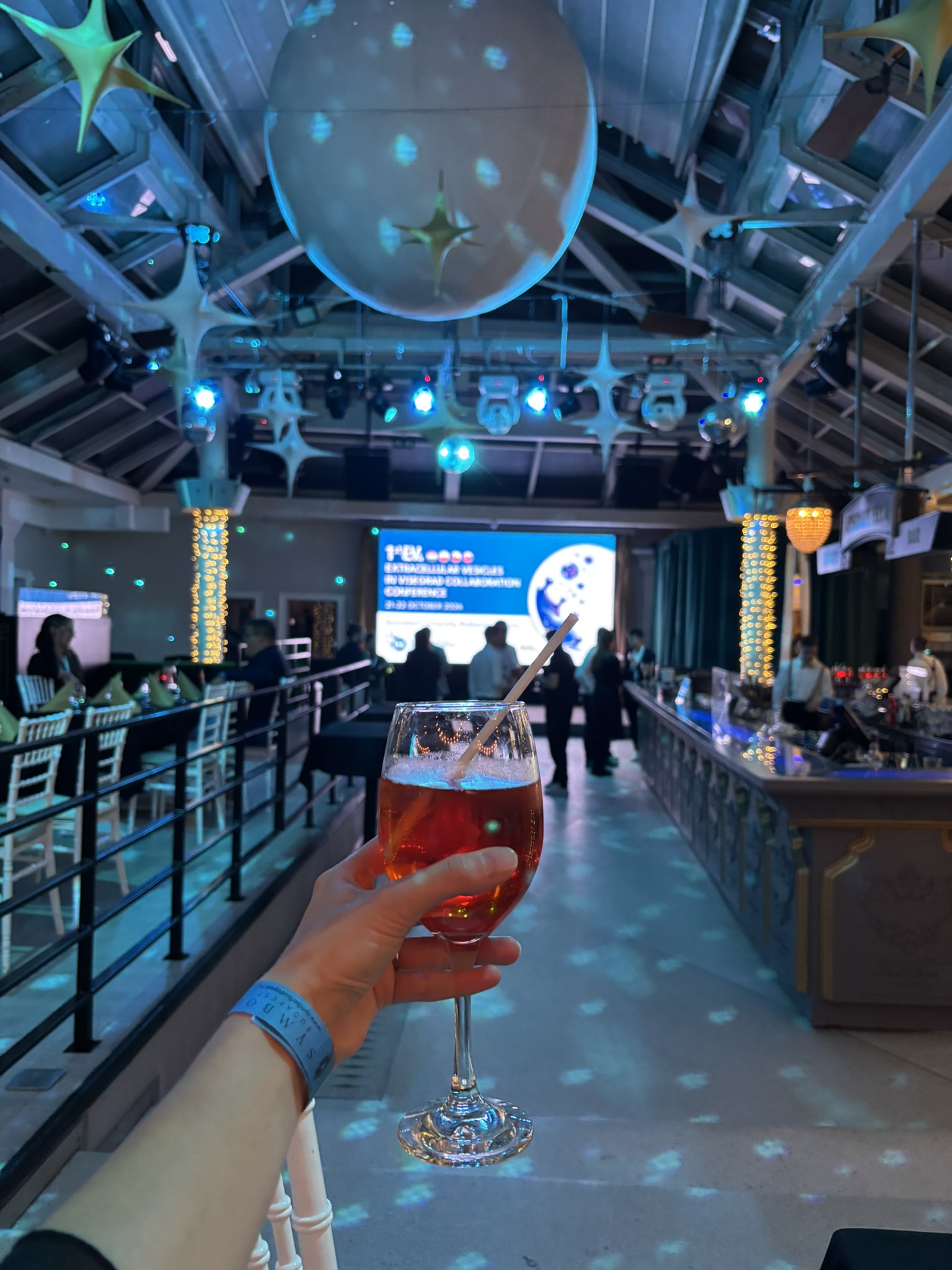
The scientific programme on 21–22 October featured keynote lectures by Ken Witwer and Wolf Holnthoner, alongside oral presentations and lively poster sessions covering EV biology, emerging technologies, diagnostics and therapeutic applications. The friendly atmosphere and conference networking evening offered plenty of opportunities for scientific discussions, new connections and future collaborations.


CzeSEV Members in the Scientific Programme
CzeSEV members contributed actively to the programme, highlighting the diversity of EV research across Czech institutions.
Oral presentations were delivered by:
- Vendula Hlaváčková Pospíchalová (Masaryk University) – EVs in the ovarian cancer microenvironment, from ascites biology to liquid biopsy and precision medicine.
- Jan Balvan (Masaryk University) – Phosphatidylserine-positive EVs from activated fibroblasts in head and neck cancers.
- Andrea Gálisová (Charles University) – Engineering EVs for image-guided targeted delivery.
- Gabriela Ambrožová (Institute of Biophysics, Czech Academy of Sciences / Masaryk University) – Lipid remodelling and iNOS cargo in macrophage-derived EVs.
- Vojtěch Šprincl (Institute of Experimental Medicine, Czech Academy of Sciences / Charles University) – Cellular miRNA abundance and EV miRNA cargo composition.
Special congratulations to Vojtěch Šprincl, who received the Best Young Talk Prize for his outstanding presentation!


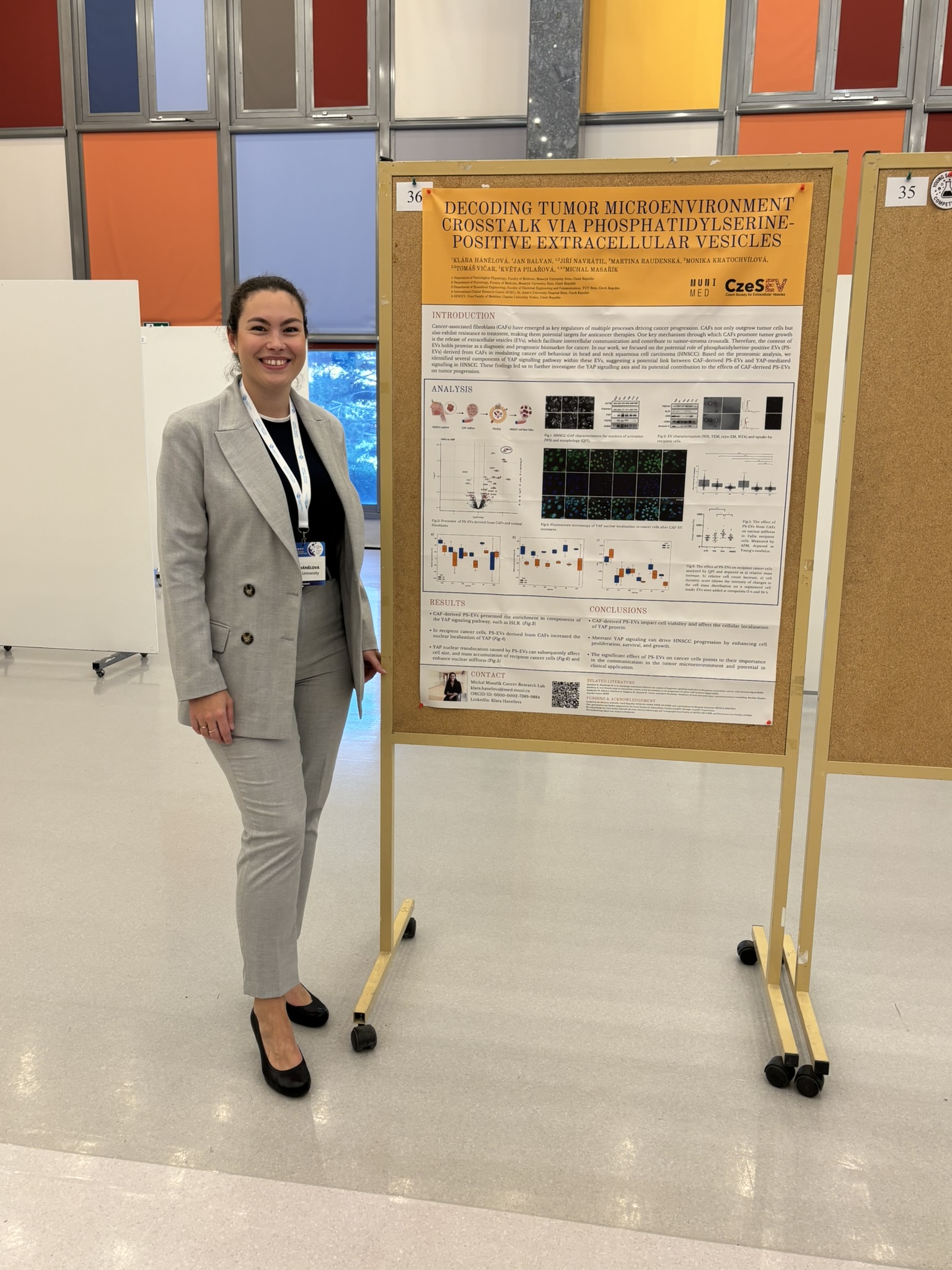
Poster presentations included contributions by Anna Juráčková (tetraspanin-dependent EV cargo remodelling), Stanislava Sladeček (brain-derived EV enrichment from plasma), Šárka Hrachovinová (ascites-derived EV biomarkers in ovarian cancer), Klára Hánělová (phosphatidylserine-positive EVs in tumour microenvironment communication), Monika Kratochvílová (CAV1-dependent EV cargo changes in prostate cancer), Magdaléna Bočánová and Veronika Mlčeková (bacterial EVs in infective endocarditis), and Radmila Žižková (mesenchymal stem cell-derived EVs and bone cells).
Thank you to all our members for sharing their research and contributing to the scientific discussions!


CzeSEV Travel Grants
Supporting not only early-career researchers remains an important priority for CzeSEV. We were delighted to award four travel grants of up to CZK 10,000 each to support participation in EV4. Read their personal experiences and reflections from EV4 2026:
Magdaléna Bočánová – Masaryk University, Gabriela Ambrožová Research Group
"The EV4 conference in Budapest was the first conference I ever attended, so I was quite nervous about it. However, I was pleasantly surprised by how great the experience was. At first, I felt stressed about other scientists asking about my poster and results, but everyone was very polite, genuinely interested in my work, and gave me insightful feedback and new perspectives I hadn't considered before. I also made valuable contacts that I will definitely use in the future. Overall, it was a truly inspiring experience. The Travel Grant I received from CzeSEV made it all possible, and I am extremely grateful."
Burcu Gülbay – University Hospital Essen, Bernd Giebel Research Group
"Receiving the CzeSEV Travel Grant to attend the 1st EV4 Conference was an incredibly valuable opportunity, both professionally and personally. The grant covered approximately 80% of my expenses, making my participation possible and significantly reducing the financial burden. I had the opportunity to present my research in a poster session, exchange ideas with fellow researchers, establish new professional connections, and learn from valuable scientific presentations. I especially appreciated the concept of bringing together researchers from the Visegrád countries under one scientific platform, encouraging scientific exchange and future collaborations. The experience strengthened my motivation to continue developing my research and broaden my scientific network. I sincerely appreciate CzeSEV for making this opportunity possible."
Klára Hánělová – Masaryk University, Jan Balvan Research Group
"Attending the EV4 conference in Budapest was a very valuable experience, both scientifically and professionally. I really enjoyed the opportunity to meet colleagues from different laboratories, exchange ideas, and learn about their research. These conversations gave me new perspectives on my own work and reassurance that the questions we are exploring in our lab are meaningful and worth pursuing. I returned from the conference feeling more motivated and encouraged in my EV research. I am very grateful to CzeSEV for the Travel Grant, which helped make my participation possible."
Radmila Žižková – Institute of Experimental Medicine, Czech Academy of Sciences, Eva Filová Research Group
"A travel grant from the Czech Society for Extracellular Vesicles enabled me to attend the 1st EV4 Conference: Extracellular Vesicles in Visegrád Collaboration, where I experienced a wonderful, friendly atmosphere and met lots of lovely people. As a newcomer to the field of extracellular vesicles (EVs), I made new contacts, established potential collaborations, and gained the latest insights into EV research. I'm looking forward to meeting the EV researchers again!"


CzeSEV General Assembly
On 21 October, CzeSEV held its General Assembly in a hybrid format, bringing together members in Budapest and online. The meeting reviewed the society's activities, finances and membership development, discussed priorities for the coming years and included the re-election of the CzeSEV Board for the 2027–2029 term, ensuring continuity in the society's leadership.
The discussions also focused on supporting young researchers and strengthening national and international cooperation.


Thank You and Looking Ahead
A special thank you goes to Zoltán Giricz and Csenger Kovácsházi, who led the local organisation, and to Edit Buzás and the entire Hungarian EV community and International Organizing Board for their dedication and warm hospitality. We also sincerely thank our colleagues from the Slovak and Polish EV communities, the organising company Altagra, and all volunteers, speakers and participants who contributed to the success of the meeting.
We are particularly grateful to all our sponsors and industry partners, whose generous support made the conference, hands-on workshops and networking activities possible. Their involvement was instrumental in bringing together researchers, technologies and ideas from across the EV community. The first EV4 Conference provided a promising start for the EV4 Alliance and opened new opportunities for collaboration within and beyond the Visegrad region.
We look forward to continuing this collaboration and meeting again at future EV4 events!


Highlights from ISEV2026
From April 22–26, San Juan, Puerto Rico hosted the 15th Annual Meeting of the International Society for Extracellular Vesicles (ISEV2026). Under the theme “Extracellular Vesicles in Translation,” the meeting brought together more than 900 researchers, clinicians, technologists, and industry experts from around the world to discuss the future of EV research and its clinical applications.


CzeSEV was proudly represented by two of our members, both of whom contributed to the scientific program. The meeting opened with Education Day, focused on EV fundamentals, technologies, and practical challenges in the field. During the session “What Went Wrong?”, SNEV ambassador Vojtěch Šprincl shared his insights into experimental pitfalls and troubleshooting strategies. He highlighted how peer-to-peer transparency can help young researchers avoid common mistakes and significantly accelerate methodological optimization.


On Thursday, Andrea Gálisová presented the first major project from her newly established research group. Her talk, “A nanobody-tag system for versatile functionalization of extracellular vesicles,” introduced a novel strategy for engineering EVs using nanobody-based approaches. The presentation showcased the potential of modular EV functionalization for future therapeutic and diagnostic applications. We warmly congratulate Andrea on this important milestone and the successful international debut of her group’s work.
On Saturday, Vojtěch presented his talk, “The extracellular vesicle protein corona is a significant determinant of blood-brain barrier protection under ischemic-like conditions.” His work focused on the role of the EV protein corona and investigated the mechanisms of action of neural stem cell-derived EVs under ischemia-like conditions, contributing to the growing interest in EV-mediated neuroprotection.


Beyond the scientific sessions, ISEV2026 served as an important platform for networking and international collaboration. Andrea and Vojtěch officially represented CzeSEV during the Global Network of National Societies session, helping strengthen connections between the Czech EV community and the broader international EV field. Between sessions, they also experienced the vibrant culture of Puerto Rico, a reminder that scientific progress is driven not only by data and experiments, but also by the personal connections and collaborations formed within the community.


Highlights from CzeSEV 2025 at BIOCEV
On 11 November 2025, the annual meeting of the Czech Society for Extracellular Vesicles (CzeSEV) was held at BIOCEV in Vestec. The event welcomed over 80 participants from academia, research institutions, and industry, creating a dynamic setting for scientific exchange and critical discussion on extracellular vesicle (EV) research.

Keynote Lecture
The keynote lecture, “The Social Media of the Malaria Parasite”, was delivered by Prof. Neta Regev-Rudzki from the Weizmann Institute of Science, Israel.
Her research focuses on cell–cell communication in malaria, particularly how the parasite uses extracellular vesicles (EVs) to influence host cells and shape disease progression. Among her major contributions is the discovery of 20S proteasomes within malaria-derived EVs, enabling precise degradation of red-blood-cell proteins and supporting parasite invasion. Prof. Regev-Rudzki’s enthusiastic talk offered a strong message for early-career researchers: trust your ideas, pursue bold hypotheses, and keep pushing forward even when the support around you is limited.


Scientific Talks
The oral programme was structured into three thematic blocks, covering topics ranging from bacterial EVs to EV roles in cancer, advanced imaging approaches, and lipidomic characterisation. These presentations highlighted the diversity of EV-related research currently underway across the Czech Republic, an evidence that EV biology has become an integral part of multiple scientific disciplines in the region.


Poster Session
A wide-ranging poster session complemented the oral presentations, offering insight into emerging methods, model systems, and applications. The student poster prize was awarded to Veronika Mlčeková for her work: “ Extracellular Vesicles from Clinical Staphylococcus aureus Strain Elicit Inflammatory Responses Relevant to Infective Endocarditis”


Technology Demonstrations
Several instrument demonstrations were available throughout the meeting, giving participants hands-on exposure to current analytical platforms:
- Live EV Isolation (TFF) & NanoAnalyzer (NanoFCM)
- NanoSight Pro (ANAMET)
- Explorer Demo (Accela)
- ZetaView Demonstration (Particle Metrix)


General Assembly
During the general assembly, the CzeSEV board introduced and outlined the society’s development and future direction. Vojtěch Šprincl also presented the activities of SNEV, highlighting its role within the broader EV community.
We thank all participants for contributing to a constructive, evidence-based meeting. We look forward to seeing you again at the next CzeSEV gathering.


CzeSEV at CSAC 2025: Introducing the Field of Extracellular Vesicles
Representatives of the CzeSEV participated in the 2025 Annual Meeting of the Czech Society for Analytical Cytometry (CSAC), where they had the opportunity to introduce participants to the rapidly evolving field of EV research.
The program began with a keynote lecture by Dr. Maximilian Hartinger, who presented on flow cytometry analysis of small particles. His talk provided an excellent foundation for understanding current analytical approaches to studying EVs and other submicron particles.
Following the keynote, CzeSEV organized a dedicated EV session, chaired by Vendula Pospichalova and Gabriela Ambrozova. The session featured four oral presentations, highlighting various aspects of EV biology, isolation, and characterization. The interest in the topic was further reflected in the poster session, where nine posters were devoted to EV-related research.
CzeSEV would like to express its sincere appreciation to the CSAC Board for the opportunity to contribute to this year’s program and congratulates the organizers on a highly successful and professionally executed meeting. Events such as CSAC 2025 provide an important platform for scientific exchange and foster collaboration across disciplines — a key element in advancing EV research in the Czech scientific community.


CzeSEV at MOVE 2025: Science, Collaboration, and Culture in Tartu
As the vibrant rhythms of Estonian folk dance opened the evening, the 3rd MOVE Symposium (MOVE 2025) officially began in the charming city of Tartu, Estonia. Continuing the successful tradition of previous years, members of our society once again took an active part in this inspiring international event contributing to the scientific program, connecting with colleagues, and embracing the local culture. The symposium unfolded in an atmosphere of intellectual energy and collegial spirit, which persisted throughout the entire meeting. Our members made significant contributions to both oral and poster sessions.


Irma Shabussova delivered a presentation titled “The Nose Knows: Bacterial Extracellular Vesicles as Intranasal Postbiotics in Allergy Prevention and Treatment,” offering valuable insights into the potential role of bacterial vesicles in allergy management. Further research from our society was showcased by Olga Janoušková, Vojtěch Šprincl, and Jan Balvan during the poster session, highlighting diverse advances in extracellular vesicle research. Jan Balvan also served as co-chair of the session “Extracellular Vesicle-Based Novel Technologies” and led the poster walk, while representing CzeSEV in a round-table discussion dedicated to future networking activities within the MOVE initiative.
The event was marked by a collaborative and welcoming atmosphere, excellent organization, and numerous networking opportunities, a testament to the outstanding work of the Baltic Society for Extracellular Vesicle Research and its president, Prof. Alireza Fazeli.
On behalf of our entire community, we extend our sincere thanks to the organizers and look forward to reuniting with the MOVE network at the next symposium in Budapest, Hungary, in October 2027.
Highlights from ISEV 2025 in Vienna
At the end of April 2025, the International Society for Extracellular Vesicles held its largest—and by many accounts, most successful—annual meeting to date. ISEV2025 welcomed more than 1,800 participants from across the globe, uniting researchers, clinicians, and innovators to share and explore the latest breakthroughs in EV science.The conference kicked off with a dynamic Education Day, setting the tone for an intensive four-day program. Sessions covered a broad spectrum of topics, from fundamental EV biology to state-of-the-art technologies and emerging clinical applications, reflecting the growing impact and potential of EV research.


We are especially proud of the CzeSEV for their strong presence and valuable scientific contributions. CzeSEV continues to play an active role in the Global EV Network, which now includes 38 national member societies, and in the Student Network on EVs (SNEV), supporting the next generation of EV scientists.


The social program was just as engaging as the scientific sessions. A standout event was the EV Pub Quiz, where a Czech-German team showcased both impressive knowledge and lively team spirit. It was a perfect example of the dynamic international collaborations that continue to propel the field forward.


ISEV2025 demonstrated the momentum and diversity of the global EV research community. From basic science to translational breakthroughs, the meeting showcased the enormous potential of EVs in medicine and biotechnology. We are excited about the future and look forward to continuing our collaboration with partners worldwide in this rapidly evolving and dynamic field. See you next year in Puerto Rico!

Highlights from 2nd MOVE Symposium 2024
We thank our members for their active participation at the #2nd MOVE Symposium. We had an awesome time in Belgrade! Our CzeSEV team jumped right in, sharing our passion for EVs and connecting with the amazing #MOVE_ev community.
Here are some highlights from our participation:
- Congratulations to Irma Schabussová, who won the Best Oral Presentation Prize with her talk Therapeutic potential of extracellular vesicles of E. coli O83 in immunomodulation and allergic airway inflammation
- Vendula Pospíchalová and Olga Janoušková gave interesting talks on Ascitic and Plant EVs, respectively.
- Stanislava Sladeček, Oksana Batkivska and Petra Riegerová presented compeling posters.
- Vendula Pospíchalová led the session on EVs in health and disease 3 as co-chair and represented CzeSEV during MOVE consortium negotiations.
The vibe was super friendly and collaborative, making it easy to share ideas and learn from each other. A big applaus to the Serbian Society for Extracellular Vesicles (SrbEVs) and especially the SrbEV President Maja Kosanović for organizing such a welcoming and inspiring event. 🙌
We’re buzzing with new ideas and connections and looking forward to build on for future projects. Thanks to everyone who made this conference special – see you next time in Estonia in autumn 2025


Joint Annual Meeting of ASEV and CzeSEV 2024
The Joint Annual Meeting of the Austrian and Czech Societies for Extracellular Vesicles (#ASEVCzeSEV2024) opened with a beautiful presentation prepared by ASEV President Wolfgang Holnthoner and CzeSEV President Vendula Pospíchalová, highlighting the deep connections between Austria and the Czech Republic. This inspiring introduction set the stage for an exceptional gathering, providing EV researchers from both countries—and beyond—a unique opportunity to connect, exchange ideas, and initiate new collaborations. We are deeply grateful to all CzeSEV members for helping to shape this important milestone with us. A special thanks also goes to the participants, organizing committee, student volunteers, and sponsors, whose dedication and hard work made this event extraordinary.


For the first time, we had the opportunity to present the diverse and expanding body of Czech EV research on an international stage. A huge congratulations to Ilona Pávková for securing second place in the best poster presentation with her work, "Extracellular Vesicles Released from Macrophages Infected with the Intracellular Pathogenic Bacterium Francisella tularensis." We also applaud Klára Hánělová, who won third place in the best oral presentation category for her talk, "The Importance of Extracellular Vesicles as Potential Biomarkers of Head and Neck Cancer."
For a brief overview of the conference highlights, visit the wrap-up section on ASEV website: https://www.asev.at/annualmeeting.


Highlights from ISEV 2024 in Melbourne
The annual meeting of the International Society for Extracellular Vesicles (ISEV) is organized annually and brings top researchers and scientists from around the world together to share and discuss the latest advances in the EV research and technology. This year ISEV was held in Melbourne, Australia on May 8-12 with the main message of Discover & Innovate & Understand. The meeting was kicked-off with an Education Day where world-renowned EV scientists educated the audience about the current EV isolation and characterization techniques. The newly elected president of ISEV Kenneth W. Witwer pointed out the importance to being “your own advocate for EVs” and shifting our research methods from “what I want this EV to do” to “what this EV actually does.”


The conference accommodated more than 1000 attendees and was packed with 125+ talks and poster sessions, debates, networking events, early career opportunities, a board meeting, student activities (SNEV) and 11 satellite sessions. The main discussed topics were the following:
- Biomarker discovery and development – the main focus was on cancer detection and a big proportion of research dealt with passage of EVs through biological barriers (e.g. blood-brain barrier)
- Advanced detection technology – advanced chip technology (optofluidic lab-on-chip) and several methods for single EV analysis (flow cytometry, high resolution imaging)
- Harnessing EV biogenesis and regulation –ubiquitination process and a detailed description of EV biogenesis and subtypes
- EV bioengineering – important for drug delivery (e.g. Cas9, RNAs), endosomal escape needs to be ruled out in order to reach effective treatments
- Imaging of EVs – multimodal and highly sensitive reporters are under development (BRET, quantum dots, MRI probes etc.)
- Xeno-EVs –importance of the outer membrane vesicles in bacteria
- New horizons for EV analysis and diagnosis – novel technologies for single EV analysis with or without labeling and the importance of upscaling methods
- Standardization, reproducibility and cost were proposed as the main challenges in EV research to be solved in future


The satellite sessions of ISEV also included a meeting of the global national societies (GNEV) where CzeSEV was introduced to the community. CzeSEV was presented on site by its board member Andrea Galisova and the joint meeting of ASEV-CzeSEV in Vienna was announced. GNEV meeting discussed a common database of EV resources worldwide and an initiative of joint regional meetings. Finally, the next meeting in Vienna in April 2025 was announced by a song of Falco.


Dynamic Insights from the IGLD-INSTAND Meeting in Leipzig, March 7-8, 2024!
Vendula Pospichalova led the opening talk at the joint session "Liquid Biopsy and EVs - the next step in clinical diagnostics." Honored to kickstart discussions on the necessity of an ISEV Rigor and Standardization Task Force on ascites.
Thanks to German Society for Extracellular Vesicles for the invitation and unwavering support of CzeSEV!


28.2.2024
The first CzeSEV meeting has come to a close!
Around 30 extracellular vesicle enthusiasts gathered in Brno for the first time to introduce themselves, exchange knowledge about extracellular vesicles, and initiate the process toward the official status of the organization! We appreciate your active participation and fruitful discussions on extracellular vesicles. More action like this in the future, the nearest one being the ASEV-CzeSEV joint meeting in Vienna 16-17th Sept 2024!


24.11. 2023 Interesting talk "Of Ovarian Cancer and Extracellular Vesicles"
A captivated audience filled the auditorium to witness Vendula Hlaváčková Pospíchalová's presentation on extracellular vesicles, during which she provided an insightful overview of her research endeavors.
"How can the examination of ascitic cells and extracellular vesicles contribute to deciphering the fundamental molecular mechanisms of disease progression? and more...

24.-27.10. 2023 Mobility for vesicles research in Europe (MOVE), Malaga, Spain
https://www.webcongreso.com/move
We extend our sincere gratitude to the organizers of The First MOVE meeting for putting together this incredible event. CzeSEV, represented by Daniela Paňková and Vendula Hlaváčková Pospíchalová, played an active. Vendula Hlaváčková Pospíchalová even chaired the session on Advances in EV Methodology, alongside the esteemed Marija Holcar from SiN-EV https://sin-ev.org/. We look forward to sharing the exciting developments that emerged from The First MOVE meeting in our upcoming newsletter.


17.-19.10. 2023 Targeting Microbiota 2023, Venice, Italy
https://www.microbiota-site.com/microbiota-uncatigorized-news/1160-targeting-microbiota-2023-venice.html
poster: Miriam Sandanusova - Exploring Enterococcus faecium-derived extracellular vesicles and their interaction with immune cells
poster: Kristyna Turkova - Interaction of Lacticaseibacillus rhamnosus-derived extracellular vesicles and intestinal epithelial cells in vitro


21.9.2023 Zkumavka SciFest, Nový Hrádek, Czech Republic
At Zkumavka SciFest 2023, focused on immunomodulatory potential of extracellular vesicles, group from Department of Biophysics of Immune System presented their data concerning bacterial extracellular vesicles and discussed them with colleagues from Poland, Austria and Czechia.
lecture: Miriam Sandanusová - Behind the Scenes: Investigating EV-like Particles in Cultivation Medium
lecture: Eva Pecháčková - Monitoring of bacterial Extracellular vesicles uptake and signaling in vitro


4.-5.9. 2023 Small New World 2.0, Graz, Austria
https://asev.at/snw.php
The foundation of CzeSEV was officially announced on the SNW2.0 meeting. We are very thankful for the warm welcome to the family of European National EV Societies (NEVS). Big thank you to the organizers for a great meeting (MedGrazUni, ASEV, GSEV, HSEV, SiN-EV, SrbEV).
lecture: Vendula Hlaváčková Pospíchalová - Proteomic analysis of ascitic extracellular vesicles describes tumor microenvironment and predicts patient survival in ovarian cancer
poster: Eva Pecháčková - Bacteria-derived extracellular vesicles as crucial mediators of intercellular communication in gut


2.-5.9. 2023 12th International Conference Analytical Cytometry, Prague, Czech Republic
https://www.conference.csac.cz/
lecture: Vendula Hlaváčková Pospíchalová - Extracellular vesicles in ovarian cancer ascites
poster: Miriam Sandanusová - Enterococcus faecium-derived extracellular vesicles and their interaction with immune cells
poster: Martin Smolko - CRISPR-Cas9 engineered tetraspanin-deficient cell lines for the analysis of extracellular vesicles


17.-21.5. 2023 ISEV Annual meeting 2023, Seattle, Washington
https://www.isev.org/isev2023-annual-meeting
lecture: Vendula Hlaváčková Pospíchalová - Extracellular vesicles in ovarian cancer ascites
poster: Kristýna Turková - Alteration of protein cargo in Lacticaseibacillus rhamnosus-derived membrane vesicles population during the growth of bacterial culture


29.9 2022 Bacteria-derived Extracellular vesicles Meeting, Brno, Czechia
